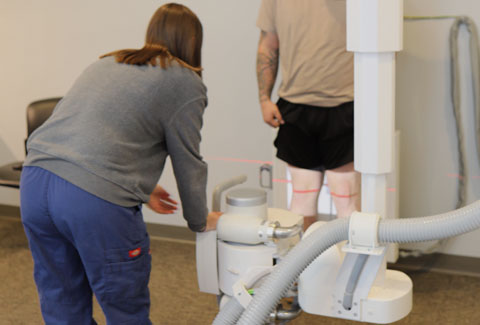
As a way for healthcare consumers, referring physicians and members of our community to get to know the doctors at Orthopaedic Associates of Zanesville better, we’re adding a monthly physician interview. We’ll ask our docs about themselves and the latest trends in sports medicine, sports injuries, reconstructive surgery and general orthopaedics.
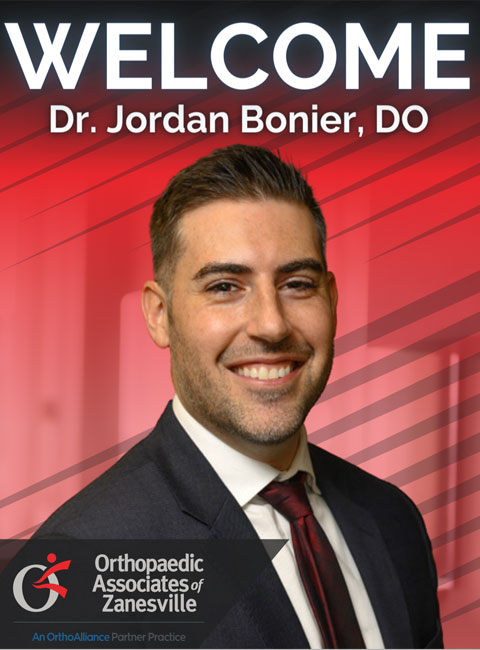
Hope you enjoy the first interview with Samuel Finck, Dr. of Osteopathic Medicine.
1. What made you become interested in sports medicine?
“I became interested in sports medicine because I like sports. I played high school sports and my mother was a nurse, so I was exposed to people being taken care of when they had injuries, either in school or through my mom. I’m also a huge sports spectator and thought it would be interesting to be to be involved with sports. During my second year in residency, I searched for what NFL teams had opportunities for fellowships and earned one with the Cincinnati Bengals and Bearcats in 2009.”
2. Can you explain more about your area of expertise? Can you talk about how the practice of sports affects the body?
“My area of expertise has to do mostly with any injury an athlete can experience – bone fractures, knee and shoulder problems. The two main joints frequently injured during sports and athletic activities was a main focus of my fellowship with the Cincinnati Bengals. Health is a big issue – getting away from the TV and getting back into fitness is huge. Many people in the state of Ohio are overweight. There needs to be more emphasis on the importance of fitness in this area. Kids should spend less time in front of the TV and go outside and play. There are more community and school programs now, and as kids get more into athletics, there are injuries and overuse problems. People of all ages who exercise can get injured, and overuse injuries, in particular, are on the rise. It’s hard to be healthy without having good joints. Sports medicine affects anyone looking to stay healthy.”
3. What are the three most common sports injuries you see in your practice? Why do you think that is?
“For the population over the age of 50, the most common injury is a rotator cuff tear. Common injuries for the younger population, ages 40 and under, include biceps tendon inflammation or degeneration and labral tears. Sixty-five percent of my practice is treating shoulder injuries. Shoulder injuries in older patients are more common because they can’t go out and do what they did when they were younger – whether it’s a form of work or sports they played. For younger patients, knee injuries such as meniscal tear and ACL injuries are the most common. Meniscal tears are also prominent in older adults because the cartilage is not as flexible as it used to be. I’ve been seeing more and more ACL tears in patients who are in their 40s and 50s.”
4. How important is the role of rehabilitation in sports medicine?
“The patients who spend the time on rehabilitation do the best. Rehabilitation is extremely important when treating an injury or post-surgery.”
5. What are the most common surgeries you perform in your practice?
“Consistent with injuries I see, meniscus and ACL reconstruction through a knee scope, rotator cuff repair, labral repair and biceps tenodesis (moving the tendon from the socket to the ball) through the scope – which is sort of a newer concept. This consists of taking the bicep from its normal attachment and moving it to a position on the ball. This procedure is starting to be seen by leading shoulder experts as a major way of treating anterior shoulder pain.”
6. What are the biggest advancements in sports medicine you have seen over the past 10 years?
“Not that there’s anything wrong with bigger incisions but the biggest advancement is how many surgeries we can perform through very small incisions. Rehab and pain management and instrumentation have come a long way along with the techniques. Now a lot of treatments and surgeries are done with small incisions and through an arthroscope.”
7. You have been honored for your volunteer work with high school athletes. What do you find most rewarding about working with young athletes?
“The most rewarding part of working with the younger athletes is that they really want to get better. The kids I see in high school athletics tell me exactly what is wrong and are willing to listen to the doctor. Kids are more willing to listen and give something a try, whether it’s therapy or a treatment plan.”
8. What is your favorite part of your medical practice and why?
“The group itself at OAZ is great. It was daunting to find a place to work after residency, but I knew a couple of reps in the area that worked at OAZ and they all had positive things to say. It’s rare to find a practice that brings in a new partner and treats them as a colleague from the very beginning.”
9. You mentioned that you’re an avid sports fan. Which sports and which teams are your personal favorites?
“The Cincinnati Bengals, Reds and, anyone growing up in Ohio, loves the Buckeyes. I enjoy OSU basketball and think March Madness is one of the purest moments in sports. It’s just unspoiled sportsmanship.”