|
|
|
|
Ohio Arthritis
Monday, June 4th, 2012
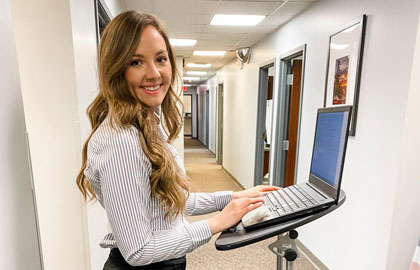
The most dangerous part of your workday might surprise you. It’s not the drive, or the occasional unhealthy meal on the go. If you’re like most Americans, your desk job could be doing you in. Regular computer users perform 50,000 to 200,000 keystrokes each day, according to the American Academy of Orthopaedic Surgeons (AAOS). This could lead to poor posture, repetition and forceful exertions that can cause nerve, muscle, tendon or even ligament damage.

To avoid nagging injuries due to repetitive computer use, follow these prevention tips from AAOS:
- Use a properly set-up workstation.
- Use correct posture including keyboard and pointing device techniques.
- Take frequent rest breaks.
You might be wondering what a “proper work station” looks like. Experts suggest your office should fit your body. The more you can avoid sitting or standing in awkward positions, the better chance you have of avoiding musculoskeletal injuries. If your office chair is the wrong height for your desk or does not properly support your back, it can lead to problems.
As for the work surface itself, a general rule is to have the desk at elbow level when sitting and to allow at least two inches of clearance below the desk for your legs.
According to AAOS, when positioned properly at your desk and keyboard:
- Your elbows stay near your body in an open angle allowing circulation to the lower arms and hands.
- Your arms are nearly perpendicular to the floor.
- Your wrists are nearly straight.
Although most people might overlook such details, these steps can help you stay healthy over time. You should also make the best use of your rest breaks. Stretch your arms, neck and head periodically throughout the day and remember, these tips don’t just apply from 9 a.m. to 5 p.m. – they are also helpful when surfing the Internet at home.
Tags: Arthritis, Bone and Joint Health, Bone health, computer, how to sit at a computer, joint health, ligament, OAZ, Ohio Arthritis, Ohio Orthopedic, Ohio Orthopedic doctor, Ohio Orthopedic Doctors, Ohio Orthopedics, Orthopaedic Associates of Zanesville, Southeastern Ohio Orthopaedics, strains in neck, tendon, Upper Body and Shoulder Injuries Posted in Bone and Joint Clinic | No Comments »
Tuesday, February 28th, 2012
By Dr. Drew Layne
If you have arthritis, you’re not alone. An estimated 50 million Americans have been diagnosed with the disease, and more than 20 million report limited activities because of it.
Arthritis is not one disease, but several conditions caused by inflammation of the tissue lining the joints. Over time, the cushioning material between two bones may deteriorate, causing bones to rub together. That can result in severe damage to the joint.
Osteoarthritis is the most common form of arthritis and can be caused by an injury to the joint. However, it usually occurs on its own as we grow older. It often is found in the fingers, knees and hips.
Rheumatoid arthritis is a form of arthritis that occurs when the immune system doesn’t work properly. It most often affects the joints and bones in the hands and feet, but it also can affect internal organs.
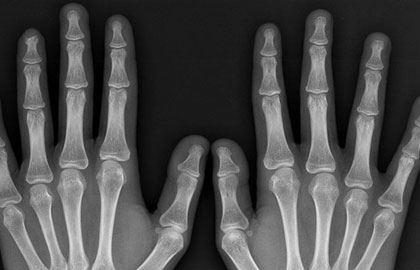
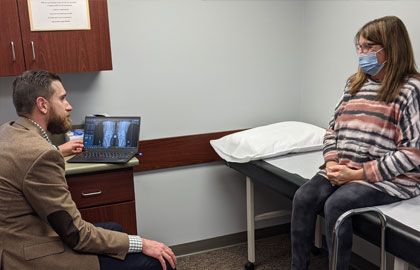
If you think you have arthritis, the first step is to see a doctor to make sure that what you have is arthritis and not something else. A doctor will examine you and take X-rays of your joints and bones. He or she may also do a blood test to decide what kind of arthritis you have.
If you have arthritis, there are a few things you can do to make life easier. Mild arthritis can often be controlled with medicines that help reduce swelling, stiffness and pain. Your doctor may suggest warm showers, stretching, the application of ice and rest. But exercise is important, too. Walking, swimming and cycling are enjoyed by many people who understand that inactivity can make arthritis worse.
In some cases, arthritis is so severe that pain is constant and joints are difficult or impossible to move. In those cases, physicians may recommend a joint replacement. Today’s advanced surgical techniques and materials make it possible for those who have replaced a hip, knee or another joint to live a perfectly normal life afterward – free of pain.
And that’s the bottom line. Whatever your situation, know arthritis is not a reason to despair. Millions of people are living with arthritis – and living life fully.
Tags: Arthritis, Bone and Joint Health, Dr. Drew Layne, joint health, Living with arthritis, Ohio Arthritis, Orthopaedic Associates of Zanesville Posted in Ohio Orthopedics, Uncategorized | No Comments »
Monday, October 19th, 2009
Orthopaedic surgeons in Ohio at OAZ support U.S. National Bone and Joint Awareness Week from October 12-20, started by the U.S. Bone and Joint Decade to significantly raise awareness of bone and joint diseases, which affect more than one billion individuals worldwide.
In support of National Bone and Joint Awareness Week, Shriner’s Hospital has posted these tips for parents:
Before kids go outside to play, be sure they:
- Have appropriate, properly fitting, sports-specific equipment and protection for games and practices, and know how to use it.
- Do conditioning, strengthening and stretching exercises appropriate to the sport or recreational activity.
- Learn the proper technique for the movements of the game (pitching, swinging a bat, protecting a goal, etc.).
- Know to take a break at reasonable intervals.
- Agree to play by the rules.
- Will stop playing if they experience pain or feel very tired.
- Drink plenty of fluids, and know to stay hydrated during and after activity.
Tips to help your child avoid overuse or repetitive motion injuries:
- Encourage involvement in more than one sport or activity.
- Choose age-appropriate sports.
- Make sure children are in the necessary physical condition for a sport or activity.
- Be sure games and practices include warm-up and cool-down routines.
- Provide appropriate shoes.
- Stress the importance of staying hydrated.
More tips parents can use to help keep kids safe:
- Be sure playing fields are properly maintained and appropriate to the activity.
- Determine whether there is appropriate adult supervision in place for the program or activity. If supervision appears to be insufficient, especially in an organized activity or sport, ask questions.
- Be sure equipment is in good condition before allowing your child to use it.
When on a playground:
- Observe the 5-foot rule: Children under age 5 should not use playground equipment that is taller than 5 feet.
- Be sure equipment meets applicable safety standards.
If you are suffering from bone and joint diseases and need an orthopaedic surgeon in Ohio, call the Orthopaedic Associates of Zanesville at 740-454-3273.
Tags: Ohio Arthritis, Ohio Orthopaedic Surgeon, Ohio Orthopedic doctor, Ohio Orthopedic Doctors, Ohio Orthopedics, Ohio Sports Injuries, Orthopaedic surgeon, Southeastern Ohio Orthopaedics, Zanesville Ohio Orthopaedic Surgeon, Zanesville Ohio Orthopedic Doctor Posted in Ohio Sports Medicine | No Comments »
Tuesday, October 6th, 2009
Back-to-school time means fall sports! The Orthopaedic Associates of Zanesville is ready to help athletes in southeast Ohio with our caring sports medicine team. We have board-certified physicians and physical therapists to treat the top ten sports injuries in Ohio.
- Ankle Sprains: The most common of all ankle injuries, an ankle sprain occurs when there is a stretching and tearing of ligaments surrounding the ankle joint.
- Anterior Cruciate Ligament (ACL) Injuries: ACL partial or complete tears can occur when an athlete changes direction rapidly, twists without moving the feet, slows down abruptly, or misses a landing from a jump
- Broken Shoulder: A shoulder fracture typically refers to a total or partial break to either the clavicle (collar bone) or the neck of the humerus (arm bone). It generally is from an impact injury, such as a fall or blow to the shoulder
- Delayed-Onset Muscle Soreness: Muscle pain, stiffness or soreness that occurs 24-48 hours after unaccustomed, or particularly intense exercise.
- Hamstring Pull, Tear, or Strain: Hamstring injuries are common among runners. The hamstring muscles run down the back of the leg from the pelvis to the lower leg bones, and an injury can range from minor strains to total rupture of the muscle.
- Knee Pain: Knee pain is extremely common in athletes. In order to treat the cause of the pain, it is important to have an evaluation and proper diagnosis.
- Shoulder Tendonitis, Bursitis, and Impingement Syndrome: These conditions are similar and often occur together. If the rotator cuff and bursa are irritated, inflamed, and swollen, they may become squeezed between the head of the humerus and the acromion.
- Stress Fracture: Stress fractures in the leg are often the result of overuse or repeated impacts on a hard surface
- Tendonitis: Tendonitis is a common sports injury that often occurs from overuse. Tendonitis can cause deep, nagging pain that is caused by inflammation of tendons. Treating tendonitis consists of rest, medication, physical therapy or changes to equipment or technique
- Tennis Elbow: The number one reason people see their doctor is for elbow pain. It is considered a cumulative trauma injury that occurs over time from repeated use of the muscles of the arm and forearm that lead to small tears of the tendons.
If you’re suffering from any of these sports injuries in Ohio, contact Orthopaedic Associates of Zanesville at 740-454-3273.
Tags: Columbus Ohio Sports Medicine, Ohio Arthritis, Ohio Orthopedic doctor, Ohio Sports Injuries, Ohio Sports Medicine, Physical Therapy Columbus Ohio, Physical Therapy in Ohio, Southeastern Ohio Orthopaedics Posted in Ohio Sports Medicine, Press Releases | No Comments »
|
|
|