Orthopaedic Associates of Zanesville

Ohio Physical Therapy

Post-surgery Physical Therapy from OAZ Supports Recovery

Friday, May 7th, 2010

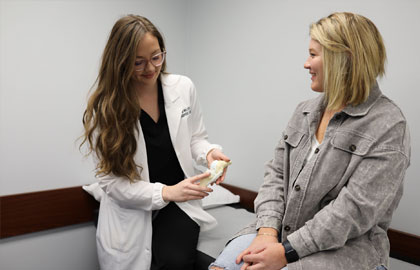
The highly qualified Ohio physical therapy team at OAZ are trained to work with patients after surgery to restore activity, strength, and motion. Physical therapists can teach specific exercises, stretches and techniques and use specialized equipment to address problems that cannot be managed without this specialized physical therapy training.

Generally, there are six stages of recovery:

Phase One (first couple of weeks after surgery): This period of the rehabilitation is called the early rehabilitative phase. This phase focuses on decreasing the pain and swelling following surgery.

Phase Two (weeks three and four): In the second rehabilitation phase, more attention is placed on joint protection as the pain has mostly disappeared and the individual may want to try more things that the joint is not ready to perform.

Phase Three (week four to six): Referred to as the controlled ambulation phase, this includes all building on the former exercises already in place plus adding few more. This is an important time for exercises requiring improved balance both in the clinic as well as the home program.

Phase Four (week six to eight): Known as the moderate protection phase, weights may be added to gradually increase resistance to existing exercises.

Phase Five (week eight to 10): This light activity phase places additional emphasis on strengthening exercises with increased concentration on balance and mobility.

Final Phase – Return to Activity: The final phase starts at about 10 weeks and continues until the desired activity level is reached.

To learn more about post-surgery PT, contact the Ohio physical therapy team at OAZ.

Ohio Physical Therapists Explain Various Treatments

Thursday, March 11th, 2010

In addition to stretching and physical movement, Ohio physical therapists at OAZ have additional treatments such as electrical stimulation and ultrasound.

Electrical stimulation is a therapy that passes an electrical current to an affected area. Nerve conduction within the region is altered, which can in turn alter muscle contractility. Blood flow to these tissues is also increased with electrical stimulation. Patients often experience diminished pain after this electrical stimulation of treatment.

Ultrasound uses high frequency sound waves to stimulate the deep tissues within the body. By passing an ultrasound probe over your body, deep tissues are stimulated by the vibration of the sound wave. This leads to warming and increased blood flow to these tissues.

Ask the Ohio physical therapists at OAZ if these treatments can help you.

Seniors Can Prevent Falls With Sleep, According to the Ohio Orthopaedic Surgeons at OAZ

Monday, December 14th, 2009

The Ohio orthopaedic surgeons at OAZ remind patients that common injuries often occur at home. In fact, new reports on osteoporotic fragility fractures show that insomnia and self-reported poor sleep are associated with increased risk of falls. This research has shown a positive relationship between falls and short sleep duration at night.

This relationship was true for women over the age of 70.

  • Women who slept less than 5 hours per night were about 47 percent more likely to have fallen twice or more during the course of the study.
  • If the sleep was fragmented, poor sleep efficiency and greater wake time after sleep

onset were associated with increased risk of recurrent falls.

If you fall into this category, take caution and be sure to get at least seven hours of sleep per night and talk to an Ohio orthopaedic surgeon at OAZ for additional ways you can prevent falls at home.

You can find more injury prevention tips on our Preventative Health Web page or contact Orthopaedic Associates of Zanesville at 740-454-3273.

Treating strains and sprains

Friday, August 14th, 2009

OAZ is known for their expertise in Ohio Physical Therapy and Ohio sports medicine and is the only facility of its kind in the Southeastern Ohio area. For treating strains and sprains, they recommend the RICE theory. RICE stands for Rest, Ice, Compression and Elevation. It should be applied to an injury in the first 24 to 48 hours. Using the RICE method should reduce swelling and pain and speed the recovery and rehabilitation process.

Rest
When suffering from a strain or sprain, it is important to reduce regular exercise or other physical activities as much as you can. Sometimes your doctor will recommend that you put no strain on your injury for at least 48 hours. Tools like crutches or a sling can help you give your injury the rest it needs to get better.

Ice
It is important to apply a cold pack to injuries regularly during the first few days after it occurs. Do so for 20 minutes at a time, four to eight times a day. This will reduce swelling and help you heal faster. To avoid cold injury and frostbite, do not apply the ice for more than 20 minutes.

Compression
Compression of an injured ankle, knee or wrist may help reduce swelling as well. Your doctor can provide you with compression bandages, elastic wraps, special boots, air casts and splints to help you apply compression.

Elevation
If possible, keep the injured ankle, knee, elbow or wrist elevated. Ideally the injury should be above the level of the heart, to help decrease swelling.

If you have hurt yourself and think you may have a strain or sprain, call the Orthopaedic Associates of Zanesville at 740-454-3273.  We specialize offering Physical Therapy in Ohio.