|
|
|
|
Sports Medicine Zanesville Ohio
Monday, January 16th, 2012
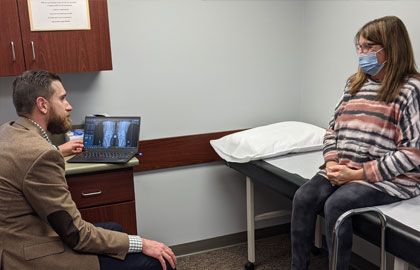
Dr. James Gasparine has been a fan of sports his entire life. Maybe that’s why, in his sports medicine practice, he most enjoys working with athletes and getting them back to action as soon as possible.
His expertise ranges in a variety of sports-related injuries from strains to fractures, to expertise in concussion management and osteoporosis. The most common injuries Dr. Gasparine deals with are muscle strains, fractures, concussions and osteoarthritis flare-ups.
Dr. Gasparine believes the three biggest advancements in sports medicine are the management of concussions, diagnostic ultrasounds and osteoporosis. The most rewarding part of his job is seeing his patient get back to playing the sports they love.
Outside of Orthopaedic Associates of Zanesville, Dr. Gasparine enjoys weightlifting, the outdoors and playing the piano.
His favorite industry-related website is the American Medical Society for Sports Medicine.
During Dr. Gasparine’s fellowship at West Virginia University, he concentrated on nutrition and weight loss, focusing on proper diet and supplemental intake with athletes and working with wrestlers to achieve proper weight in a safe way.
Tags: Ohio Orthopedic Doctors, Ohio Sports Medicine, Orthopaedic Associates of Zanesville, Sports medicine, Sports Medicine Zanesville Ohio, Zanesville Ohio Posted in Our Physicians, Sports Medicine | No Comments »
Wednesday, September 7th, 2011
We want to congratulate Dr. Gasparine, the newest physician to join Orthopaedic Associates of Zanesville (OAZ), on passing the sports medicine board! The American Board of Family Medicine (ABFM) sponsors the sports medicine board. Physicians practicing sports medicine must be:
- Certified in the ABFM
- Hold a valid, full or unrestricted license to practice
- Have satisfactorily completed or will have completed a minimum of one year in an ACGME-accredited sports medicine fellowship
- Achieve a satisfactory score on a half-day computer-based exam
The sports medicine board has a higher than normal fail rate and, unlike Dr. Gasparine, many physicians do not pass their first time around. Everyone at OAZ is proud of their colleague and looking forward to his working with Zanesville Sports Medicine patients and contributions to Ohio Sports Medicine.
To make an appointment to see Dr. Gasparine for your sports medicine healthcare needs, call 740-454-3273.
Tags: Ohio Sports Medicine, Orthopaedic Associates of Zanesville, Sports Medicine Zanesville Ohio Posted in Ohio Sports Medicine, Recent News | No Comments »
Wednesday, August 31st, 2011
Last week we began a discussion of fall sports injuries and injury prevention. We continue that discussion here with a look at football and golf.
Football injuries and prevention
No matter how well protected athletes appear to be, football lends itself to injury so injury prevention is important to address more than once. 
- Sprains and strains are the most common football injuries. These injuries can be treated by using R.I.C.E. (rest, ice, compression, elevation).
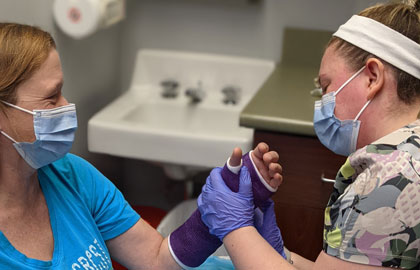
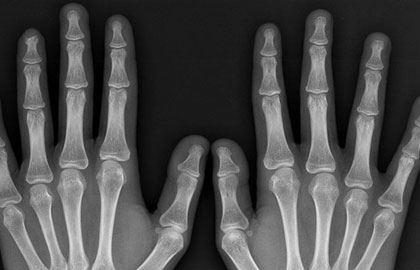
- Fractures are a common football injury as well and often include finger, wrist and leg fractures.
- Achilles tendinitis is an injury that, if left untreated, can result in a more serious injury like a ruptured tendon.
- An ACL tear is another common football injury. It can result from rough play, collisions and falls. The knee can swell and cause pain. Consult a physician if you think you have an ACL tear.
- Concussions are caused from tackles and other blows to the head. They can cause brain injury, so it is important to be aware of symptoms: confusion, short-term memory loss, and loss of consciousness.
- Spine injuries are rare but can occur from playing football and, clearly, need to be addressed by a physician immediately.
To prevent football injuries, the physicians at Orthopaedic Associates of Zanesville stress the importance of stretching out properly, incorporating cross-training into the program and seeking professional help if an injury does not improve.
Golf Injuries and Prevention
Although golf does not require the speed or endurance of soccer or cross-country running, golf injuries still occur. Here are some typical golf injuries: 
- Back pain – Swinging the club puts a great amount of stress on a player’s back. Injuries vary from the mechanical to disc-related, arthritis-related, or stress fracture-related.
- Tennis/golf elbow – Inflammation, soreness or pain is caused in and around the elbow or upper arm.
- Shoulder pain – Golfers can experience shoulder pain from rotator cuff tendinitis, a tear in the rotator cuff, A-C joint arthritis or instability in the joint.
- Carpal Tunnel Syndrome – CTS is caused from repetitive hand motion.
- Knee pain – As in other sports, knee pain can occur from a torn meniscus, knee arthritis, or a kneecap injury.
- Trigger finger – Trigger finger occurs when a finger or multiple fingers lock up or when the flexor tendon sheath, connecting the fingers, is inhibited.
- Wrist impaction syndrome – This injury happens when the bones of the wrist knock into one another because of excessive or repetitive movements.
As with other sports, take time to stretch muscles before playing golf. Since back injuries are common, incorporate back strengthening exercises, like lateral pull-downs, reverse flies or rowing, into your exercise routine. To strengthen the wrist muscles, squeeze a tennis ball, do wrist curls and reverse wrist curls. For more information on the strengthening exercises, see our website.
Tags: Fall Sports Injuries, Football injuries, Ohio Orthopedics, Orthopaedic Associates of Zanesville, Sports Medicine Zanesville Ohio Posted in Exercise, Ohio Orthopedics, Uncategorized | No Comments »
Wednesday, August 17th, 2011
The physicians at Orthopaedic Associates of Zanesville welcome Dr. James Gasparine to the practice. Dr. Gasparine comes to Zanesville from West Virginia University where he completed his sports medicine fellowship. He holds a Bachelor of Science in Biology and a Bachelor of Arts in Chemistry from West Virginia Wesleyan College. He earned his Doctor of Medicine degree from West Virginia University.
Dr. Gasparine is board-certified in family medicine in Florida, West Virginia and Ohio. He completed his residency at the University of South Florida with a concentration in nutrition and weight loss. Dr. Gasparine also worked for the Seminole High School football team as its physician and with Division I collegiate athletics while a resident at the University of South Florida and a fellow at West Virginia University. He manned a medical tent for a World Ironman competition and acted as team physician for the Arena Football League team, the Tampa Bay Storm.
Dr. Gasparine is a member of the American Academy of Family Physicians, the American Medical Society of Sports Medicine and the American Medical Association. He will be a strong sports medicine resource for the Zanesville community and throughout southeast Ohio.
Tags: Ohio Orthopedics, Ohio Sports Medicine, Orthopaedic Associates of Zanesville, Southeastern Ohio Orthopaedics, Sports Medicine Zanesville Ohio Posted in Ohio Orthopedics, Ohio Sports Medicine, Recent News, Southeast Ohio Activity | No Comments »
Wednesday, July 27th, 2011
Trail running not only gives runners and joggers a beautiful, natural atmosphere, it also provides a great alternative to running on treadmills, streets and sidewalks. Running on dirt is also less shocking on the body, which can result in fewer injuries. However, while trail running may reduce injuries, it does not eliminate all injury risk. Orthopaedic Associates of Zanesville Ohio Sports Medicine experts share the five most common trail running injuries:
1) Knee Pain
This is a common sports injury that can also occur when running on a treadmill or street; however, it can be even more severe when on a trail. The impact of running downhill can produce stress on the knee that is five to eight times your body weight. Since the knee absorbs most of the shock of the landing, downhill running makes your knee more susceptible to injury. Repetitive downhill running can increase the stress on your knees, which can result in inflammation and pain during non-running activities. The most important preventive measure trail runners can take is strengthening their quadriceps. If you’re new to trail running, you should gradually introduce your hill mileage. It’s also important to slow the pace when running downhill.
2) Ankle Sprains
Ankle sprains are a common injury among trail runners because the imperfections of the trail can cause an uneven landing. In addition to just having bad luck and missing a step, there are other reasons trail running can result in an ankle sprain.
As previously mentioned, do not run downhill too fast, especially with an extended stride that causes landing on the heel. Landing on the ball or your mid-foot will give
The body’s center of gravity and how far the runner’s foot lands in front of it is out of their control. Try to remember that the closer the foot lands under your center of gravity, the more stable you are. The longer the strides, the less stable you are because your foot is falling farther away from your center of gravity.
3 ) Achilles and Calf Strains
Running uphill frequently causes Achilles and calf strains. If you’re used to running with little or no elevation, you should approach hills slowly and not be afraid to walk up them. When running uphill, technique is also very important. Trail runners need to keep their stride short and lift their heels early.
4) Lower Back Pain
Lower back pain can result from lots of downhill running that causes the body to lean slightly backwards. The same way that knee pain results from the body’s absorption of five to eight times one’s body weight, the back can also absorb that weight and cause back pain. To prevent lower back pain from trail running, make shorter strides and land closer to your center of gravity. It is also important not to go full-speed ahead when tackling the downhills.
5) Shin Splints
Shin splints can happen at any time when someone is running, whether on a trail, treadmill or on the street. The muscles in the lower leg have two functions: one, to stabilize and two, to decelerate the foot and ankle during contact with the ground. Runners need the most stability when running on uneven surfaces, like when trail running. A runner also decelerates when running downhill. The uneven trail, plus steep downhills can causes shin splints.
Runners also need to be sure to wear the proper footwear when trail running. Trail running shoes have knobby soles and a lightweight, flexible, nylon layer to protect feet from possible puncture wounds.
As with any new sport, novice trail runners need to take it easy, be careful and ease into it.
Tags: Ohio Orthopedic, Ohio Sports Injuries, Running, Running injuries, Sports Medicine Zanesville Ohio, Zanesville ohio physical therapy Posted in Exercise, Ohio Orthopedics, Uncategorized | Comments Off
|
|
|